

Blog
The Kitchen Is a Science Lab Where You’re Allowed to Lick the Spoon

Let’s be honest: the baking-soda volcano had a good run. Five stars, legendary status, a true classic of the genre. But if you want real science — bubbling, fizzing, rising, changing-states-right-in-front-of-you science — there’s one lab that’s been sitting under your kitchen light this whole time.
It’s the kitchen. And unlike every other lab on Earth, at the end of the experiment, you get to eat it.
Every Recipe Is a Tiny Experiment
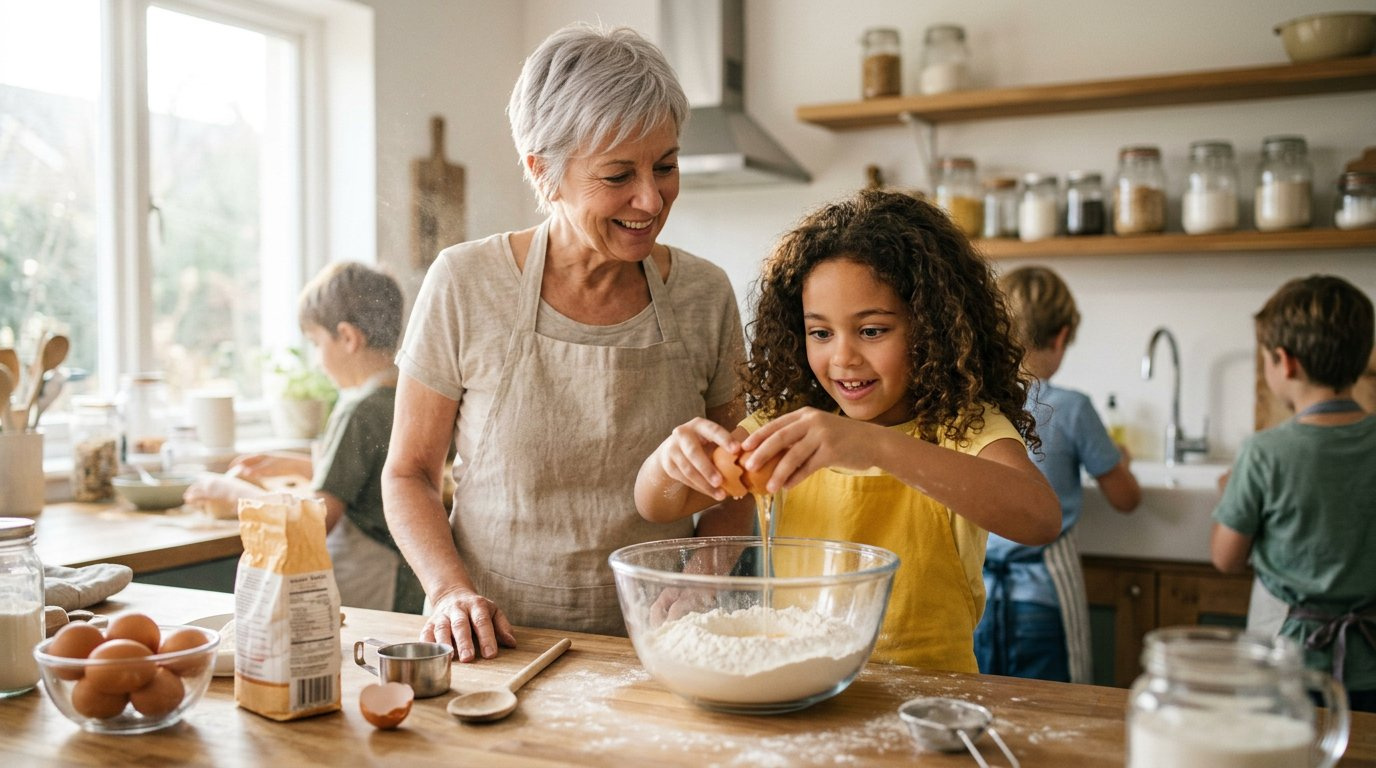
Watch a kid bake for the first time and you’ll see the scientific method playing out in miniature, no lab coat required:
- The hypothesis: “I think if we add MORE chocolate chips, it will be BETTER.” (Bold. Testable. Correct.)
- The method: measure, mix, observe, and question absolutely everything.
- The results: delicious. Occasionally explosive. Always educational.
Take yeast. To a grown-up, it’s a dusty ingredient in a little packet. To a kid, it’s a tiny pet that wakes up in warm water, burps out bubbles, and makes bread puff up like a balloon — because that’s literally what it is. That’s biology, happening live, in a cereal bowl, and it smells like fresh bread is on the way. Show me a classroom that can compete with that.
The Best Questions Start With “What If…”
Somewhere between the second and third batch of banana bread, kids start asking the good questions:
- What if we use brown sugar instead of white?
- What happens if the butter is still cold?
- What if we add rainbow sprinkles to the scrambled eggs?
Some of these experiments end in glory. Some end in sprinkled eggs (mixed reviews in this household). But every single one teaches the same golden lesson: curious people change one thing, then watch what happens. That’s not just cooking — that’s how every recipe anyone has ever loved got invented in the first place.
A Full Sensory Fireworks Show
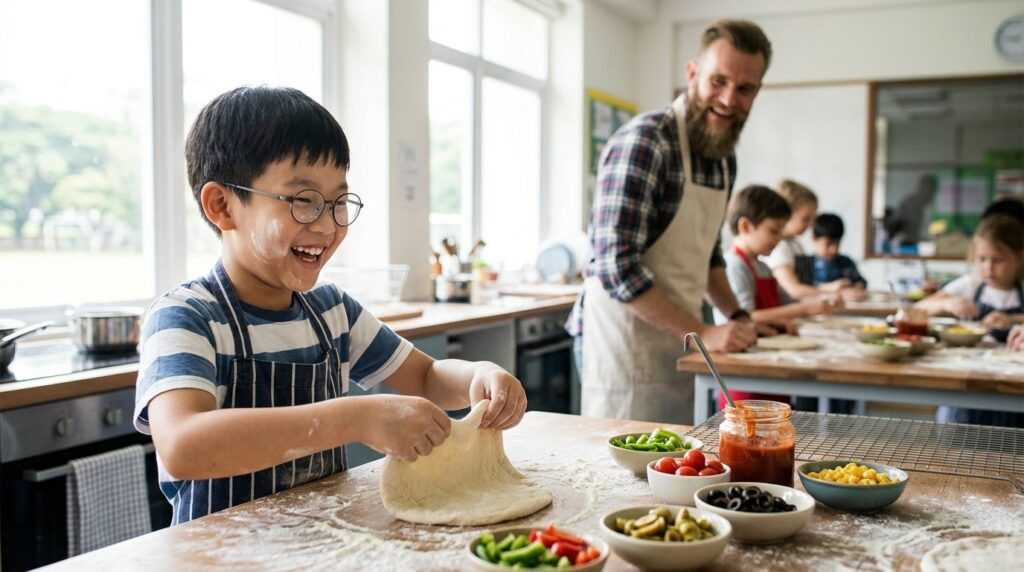
The kitchen is the only classroom where the lesson engages every sense at once. There’s the sizzle and hiss of onions hitting a hot pan, flour drifting through the window light like indoor snow, the warm cocoa smell that pulls people into the room from three doors away, and the deeply satisfying thwack of dough being kneaded on the counter.
Kids who cook learn to pay attention — to colors, sounds, smells, and timing. They notice the exact moment butter goes from golden to just-about-to-burn, and they learn what “listen for the simmer” actually means. Scientists call this “observation.” Kids call it sniffing the cookies every thirty seconds. Same skill, better snacks.
So Hand Over the Spoon
You don’t need to turn dinner into a chemistry lecture (please don’t — the pasta can hear you). Just hand over a spoon, pick a recipe, and let the questions fly. Because a kid who asks “what happens if…” over a mixing bowl is a kid who’ll keep asking it everywhere else, too.
And unlike the volcano, this lab serves dessert.